
PipeTo
The enhanced pipe operator which can specify the target position.
Installation
To use PipeTo with your projects, edit your mix.exs file and add it as a dependency:
def deps do
  [{:pipe_to, "~> 0.2"}]
end
Then run mix deps.get
Quick start
import PipeToin your module,-
pipe with
~> -
use
_to specify the target position of left-hand side expression.
> import PipeTo
> 1 ~> Enum.at([1, 2, 3], _)
# 2
It works with pipe operator nicely.
> 5 ~> Enum.take(1..10, _) |> Enum.reverse()
# [5, 4, 3, 2, 1]
In fact, if you don't specify the position with _, it acts just like normal |>
> [4, 8, 1] ~> Enum.max()
# 8
Override the Kernel.|>/2
Since ~> is the enhanced pipe operator, you can override the Kernel.|>/2 with it.
defmodule Foo do
  use PipeTo.Override

  def bar do
    2 |> Enum.drop(1..10, _) |> Enum.at(1)
  end
end

Foo.bar
# 4
Performance
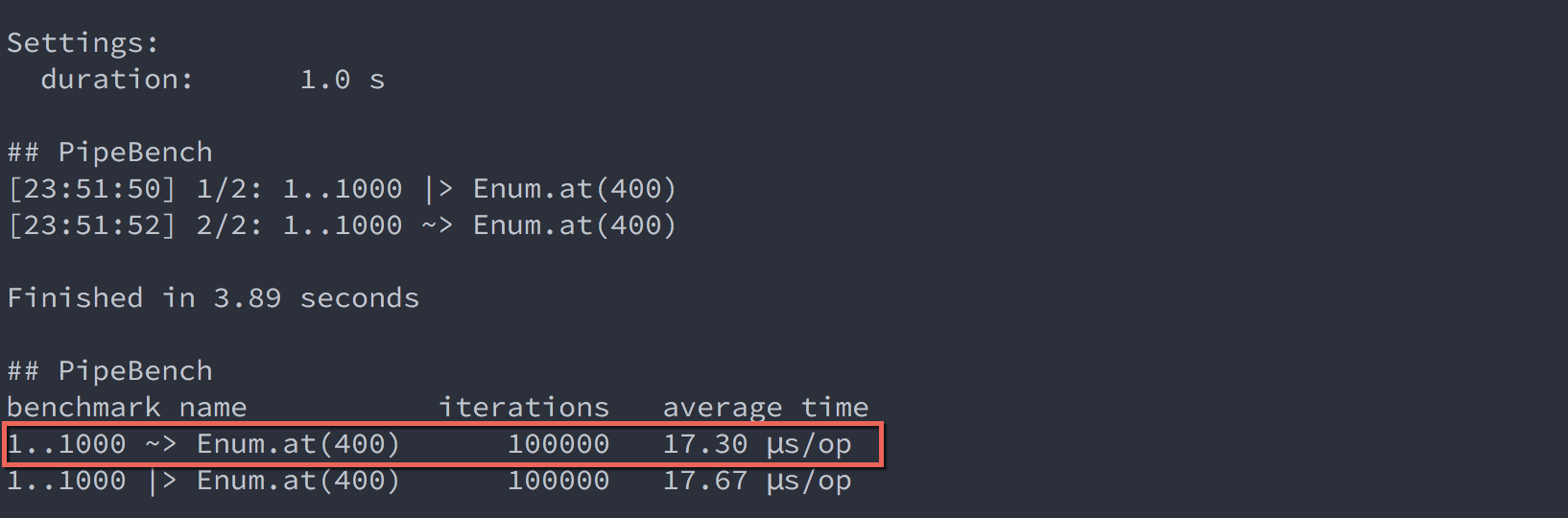
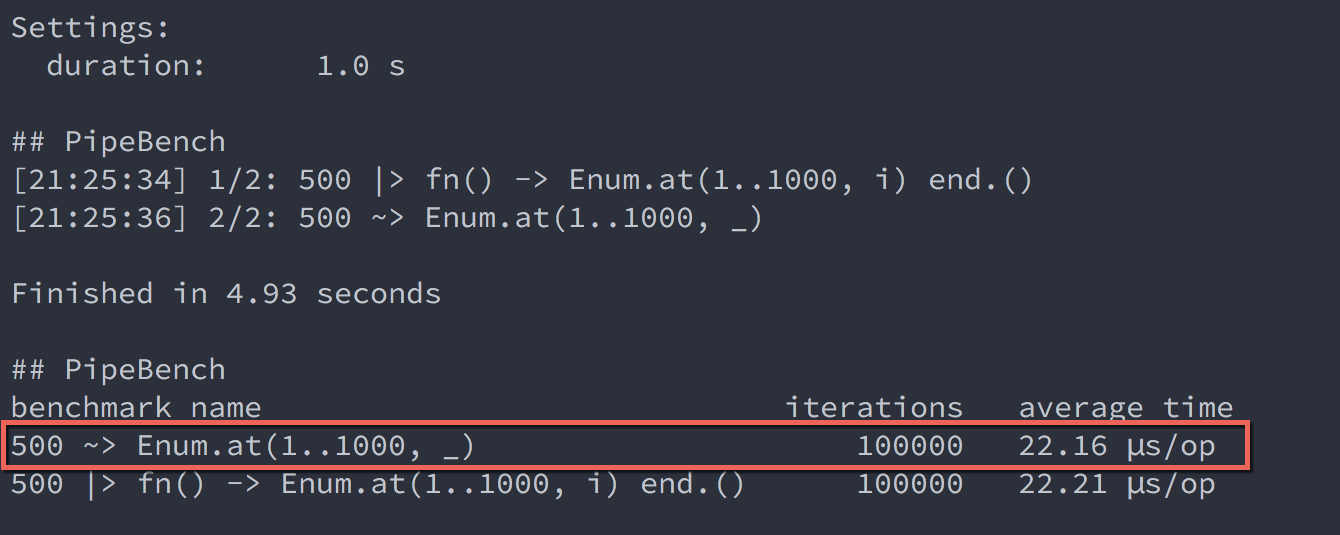
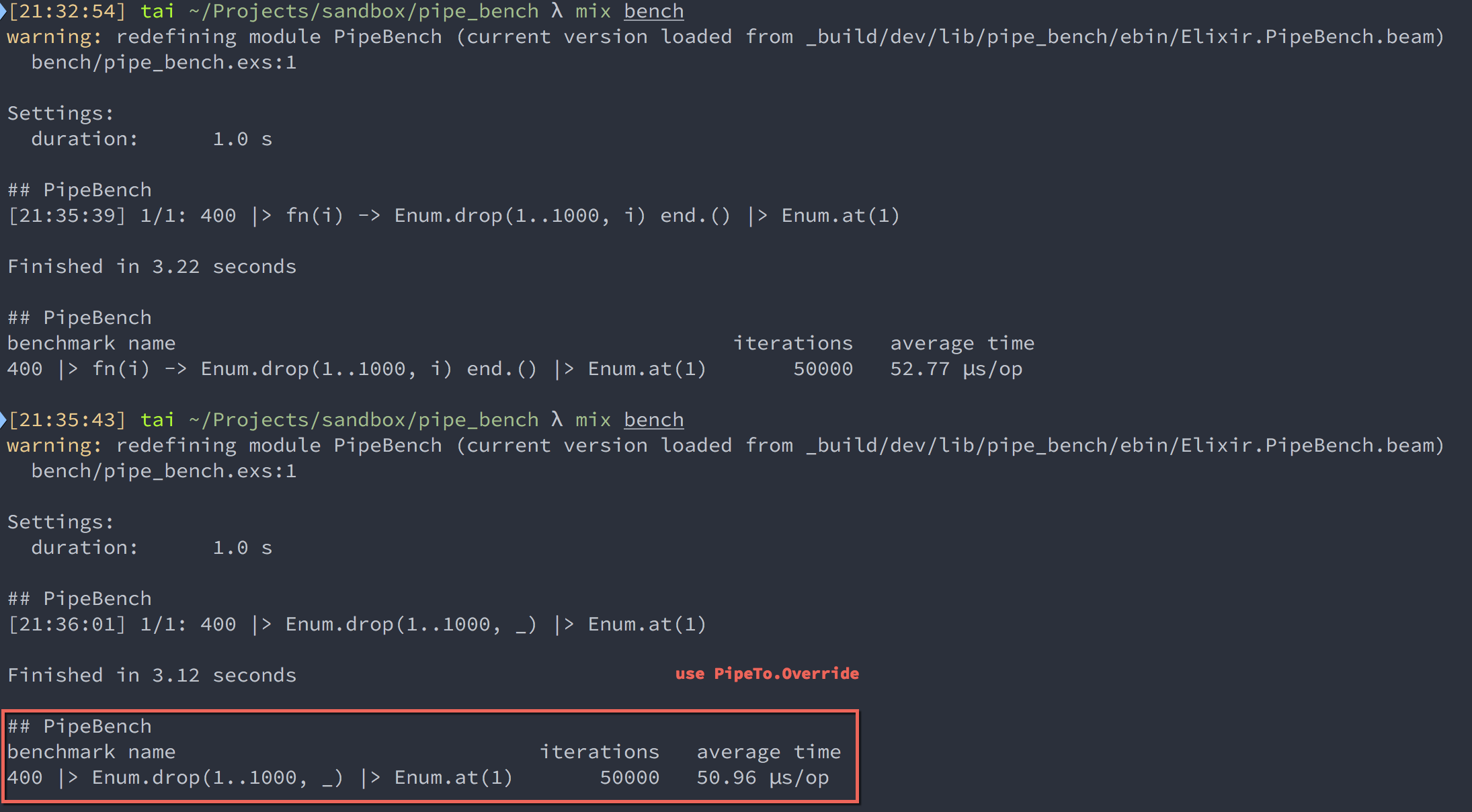
use PipeTo sightly faster then normal pipe in all these cases below. For the case 2 and case 3, I will guess
that anonymous function slow down the oridinary pipe. But it doesn't explain why in the case 1PipeTo insignificantly faster
then ordinary pipe. Any ideas?
Case 1: Ordinary Pipe vs PipeTo without index
Case 2: Pipe with anonymous function vs PipeTo with index
Case 3: Pipe with anonymous vs use PipeTo.Override
Disclaimer
I have read through the proposals of pipe operator enhancement on the elixir-lang-core, like this, this or this.
The reason I still want this is because the combination of curried function (or partial application) with pipe operator is so elegant, like this F# example here. Since Elixir doesn't have these mechnism, and also anonymous function call use .(), so syntactically (well, aesthetically) the only choice I have is to modify the pipe operator.
Is it any good?
License
Apache 2
TODO
- Discard the default operator, user should specify the operator expicitly, to work with lib like Witchcraft better.
- Pipe into mutiple target at once
- Pipe into target in nested expression, instead of only the shallowest level like now.