Etiquette
<img alt="Hex Version" src="https://img.shields.io/hexpm/v/etiquette"><img alt="Hex Docs" src="http://img.shields.io/badge/hex.pm-docs-green.svg?style=flat">A new way of creating and following a protocol
Summary
Following an example Header Packet
| Byte 0 | |||||||
|---|---|---|---|---|---|---|---|
| Header Fixed | Packet Type | Type-Specific fields | |||||
We can turn it into
defmodule Example.Spec do
  use Etiquette.Spec

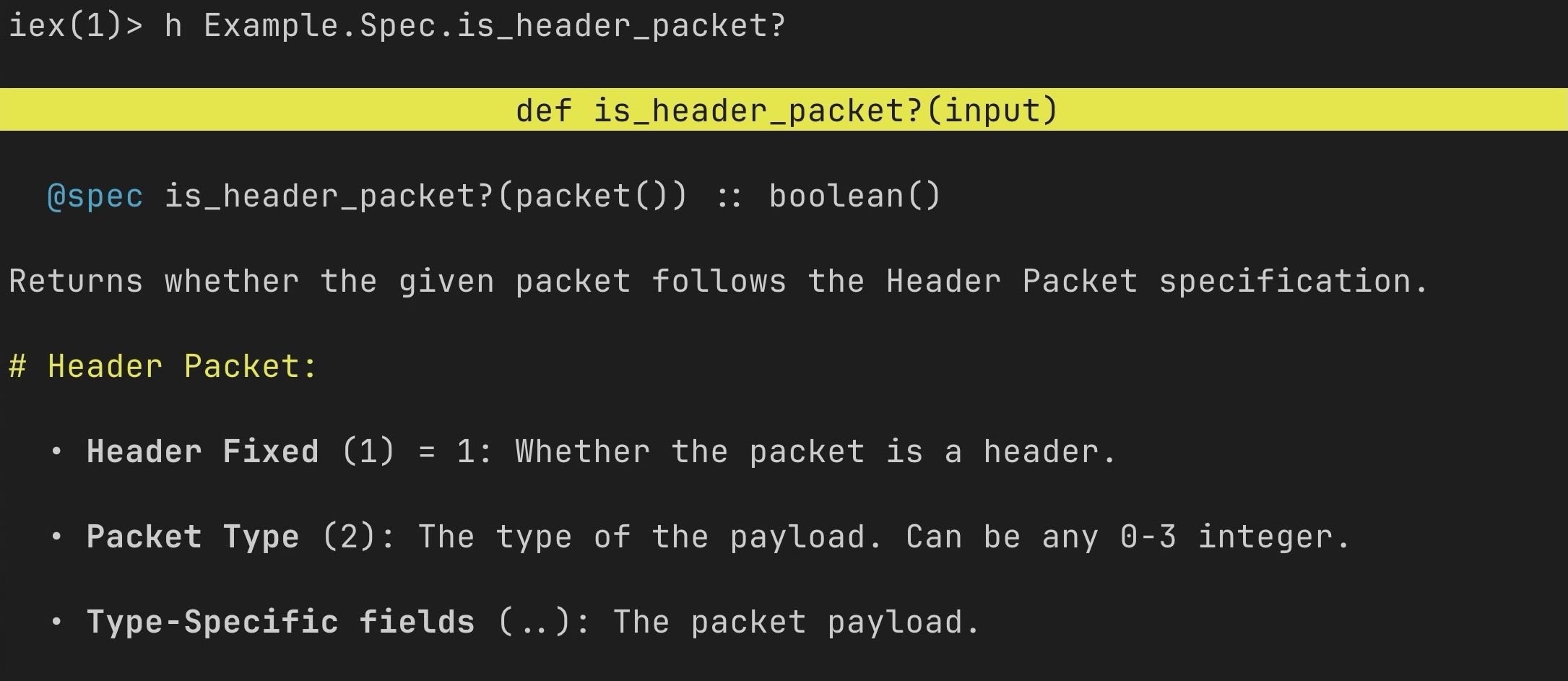
  packet "Header Packet", id: :header_packet do
    field "Header Fixed", 1, fixed: 1, doc: "Whether the packet is a header."
    field "Packet Type", 2, doc: "The type of the payload. Can be any 0-3 integer."
    field "Type-Specific fields", (..), id: :type_specific_fields, doc: "The packet payload."
  end

  packet "Hello Packet", of: :header_packet do
    field "Packet Type", 2, fixed: 0b00
    field "Hello-specific payload", 8, part_of: :type_specific_fields
  end

  packet "Conversation Packet", of: :header_packet do
    field "Packet Type", 2, fixed: 0b01
    field "Conversation-specific payload", 8, part_of: :type_specific_fields
  end

  packet "Bye Packet", of: :header_packet do
    field "Packet Type", 2, fixed: 0b11
    field "Bye-specific payload", 8, part_of: :type_specific_fields
  end
end
Such that we now have a specification
iex> Example.Spec.is_header_packet?(<<1::1, "A random string inside 30 bytes"::30>>)
true

iex> Example.Spec.is_hello_packet?(<<1::1, 0b00::2, "rest">>)
true

iex> Example.Spec.is_hello_packet?(<<1::1, 0b10::2, "rest">>)
false

iex> Example.Spec.is_bye_packet?(<<1::1, 0b11::2, 0xFF, 0xAA>>)
true

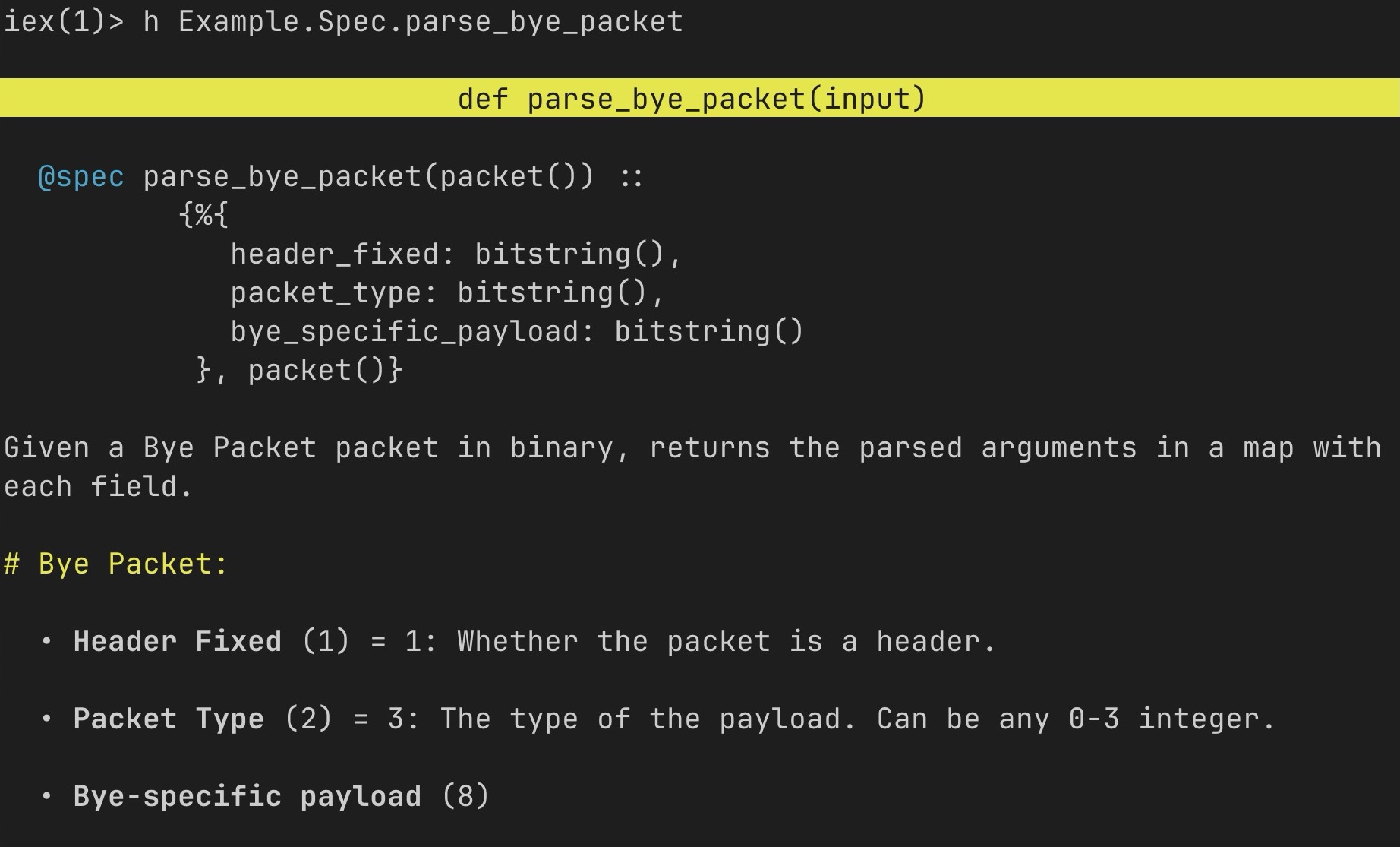
iex> Example.Spec.parse_bye_packet(<<1::1, 0b11::2, 0xFF, 0xAA>>)
{
  %{
    header_fixed: 1,
    packet_type: 3,
    bye_specific_payload: 255
  },
  <<170>>
}

iex> # Notice how only the fields that are not fixed need to be provided
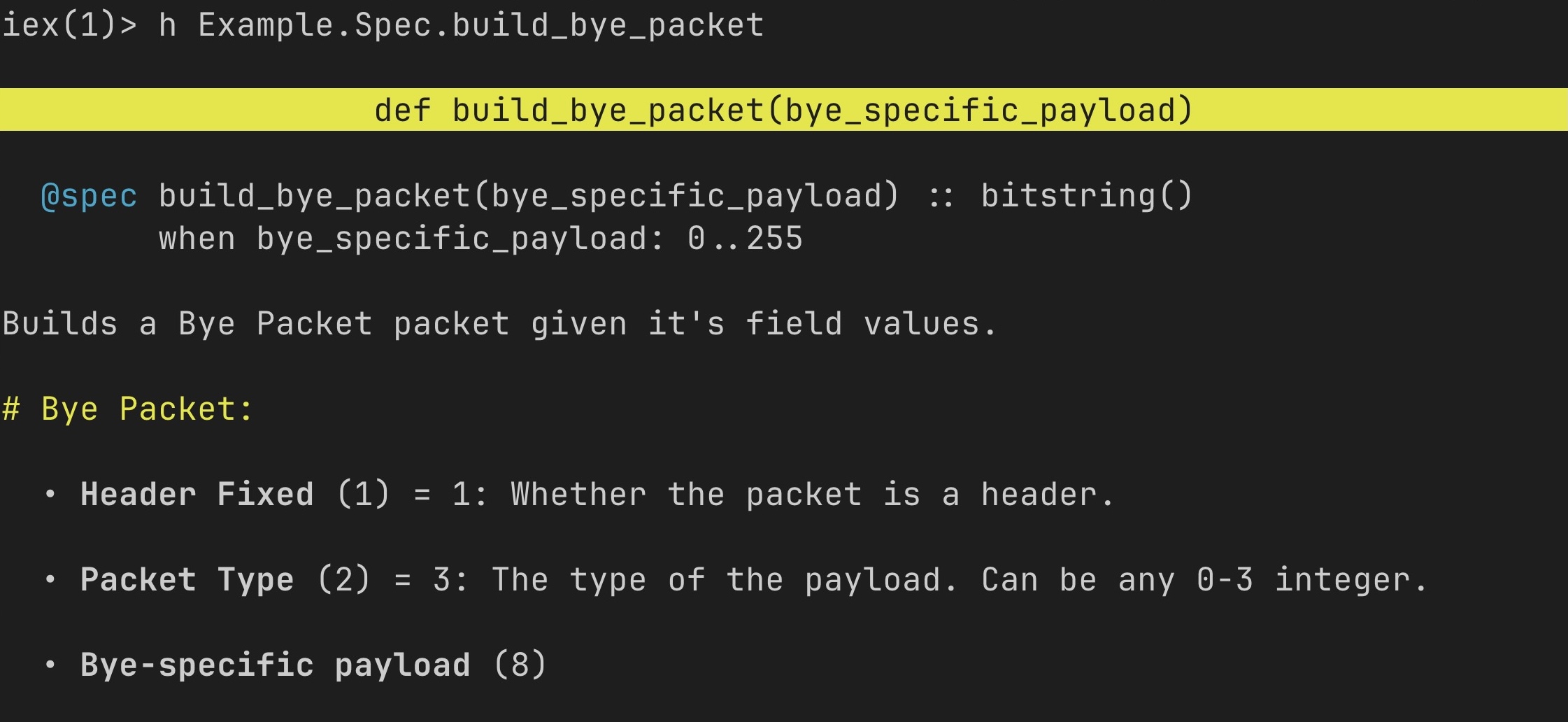
iex> Example.Spec.build_bye_packet(0xFF) |> Example.Spec.parse_bye_packet()
{
  %{
    header_fixed: 1,
    packet_type: 3,
    bye_specific_payload: 0xFF
  },
  ""
}


iex> Example.Spec.build_bye_packet(0xFF) |> Example.Spec.is_bye_packet?()
true
Not only are the functions available and functional, but the provided documentation and other arguments are also analyzed to provide in-depth documentation of each generated function: